On this page
By Spider Web Rice Field Editorial Desk
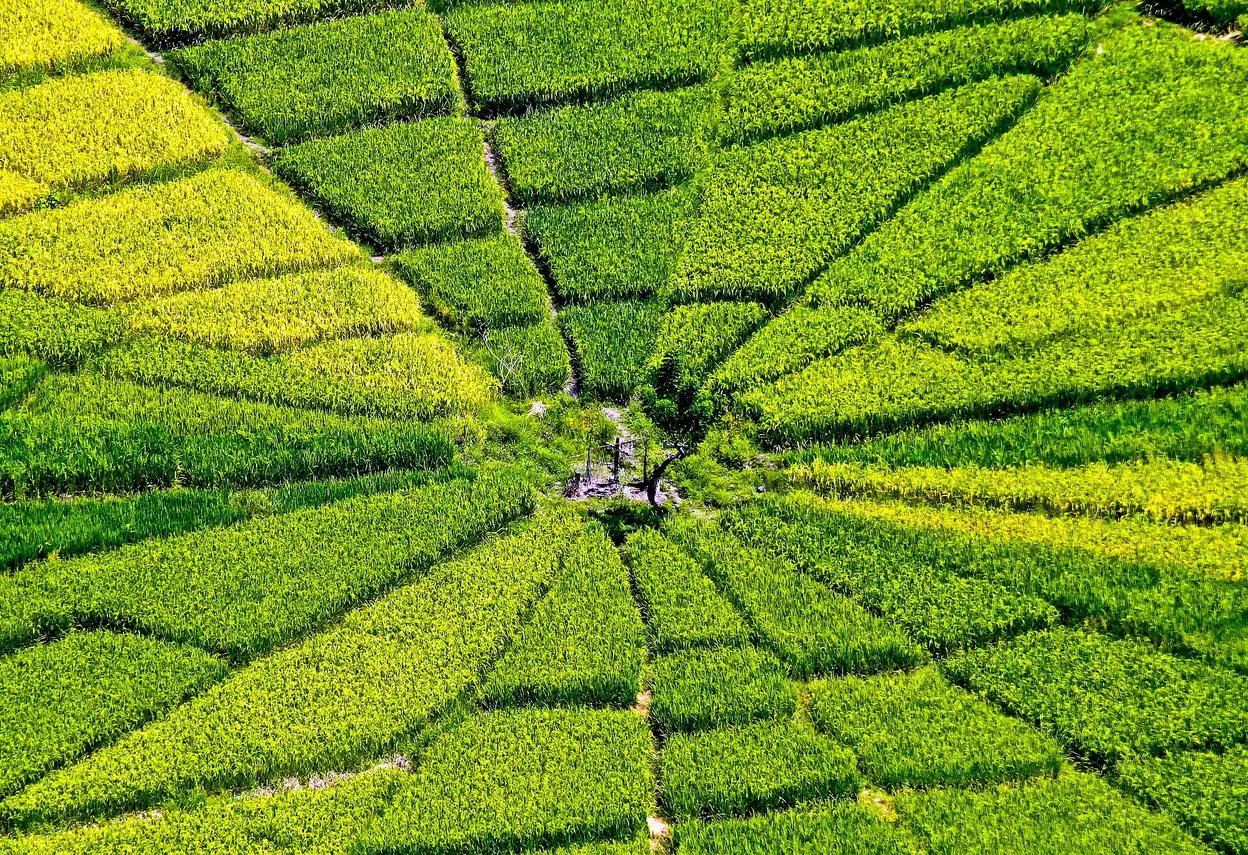
Moso land division is how Manggarai sources describe cutting a lingko into wedges. Detik, drawing on one community in Cibal Barat, reports shares measured by fingers, with a customary elder, the tu'a teno, seated at the centre and spacing small stakes. Shares are not equal in these accounts, although one national newspaper reports the opposite.
The word turns up in two senses, which causes confusion in English explanations. This article sets out the measure, the people who hold it and the arguments about fairness. For the words at the centre of the pattern, see what lodok means.
What is moso land division?
Flores Exotic Tours, an operator, says lines ran out from a central pole to the rim, in keeping with family size, and it calls each resulting segment a moso, meaning hand. Detik uses a related term for the act of measuring: sor moso, the finger measure used to space stakes called lance koe. So moso can name a share of land, and in the compound sor moso it refers to the way that share is marked out.
The hand is therefore both the tool and the name. A resident of Cancar told Mongabay that land there is divided by the moso, or hand, formula. That is the most direct link between the word and the spider web rice fields, and it comes from one person speaking in 2017.
A caution on scope belongs here. Much of the finger detail below comes from Detik's reporting, which draws on research into one community, Gendang Nampo in Cibal Barat. That is a different place from Cancar. Rites and terms vary between communities, so read it as a documented example of the method. The Cancar resident speaks of the hand formula and larger shares for leaders, without listing finger counts.
Who is the tu'a teno?
The tu'a teno, in the words of The Jakarta Post, is the elder in charge of allocating customary land, and the allocating happens at the mbaru gendang, the drum house. Detik places him physically at the heart of the operation, seated at the centre during division.
Managing allocation is a different thing from owning the land, and the sources keep those apart. Flores Exotic Tours says nobody thought of a moso as private property, and that lingko land was once worked by shifting cultivation. That is an operator's account, so weigh it accordingly. Current legal questions are taken up in our piece on lingko land rights.
His authority also has a history of being challenged. Detik reports that Goa-Tallo, Bima and the Dutch, among other outside powers, undercut both tu'a golo and tu'a teno, installing officials known as gelarang and dalu. A description of the elder's role today may therefore differ from one written about an earlier period, and from one community to the next.
How were fingers used?
The working picture in Detik is simple. The tu'a teno sits at the centre, small stakes go into the ground around him, and the gaps between stakes are set by the width of his fingers. Each gap opens out into a share.
| Share | Fingers | Description, per Detik |
|---|---|---|
| Moso rembo | Five | The largest share |
| Lide | Three | No further detail given |
| Koret | One or two | Usually newcomers |
A point of geometry helps here, though no source spells it out. Because the lines fan outward from the centre, a gap of a few fingers at the stake grows into a broad strip at the far edge of the field. A small difference at the centre becomes a large difference at the rim.
The moso is one stage in a longer sequence. A Gadjah Mada University thesis abstract sets out the lodok lingko sequence in this order: moso division, clearing, burning, and then the ceremonies of batir, kalok, hang rani and penti. The abstract gives the order, and we have no gloss for each of those terms. It lists moso division first.
Who got more land?
Here the sources disagree, and the disagreement should stay visible. On one side, the Cancar resident quoted by Mongabay says leaders, meaning the tu'a teno and tu'a golo, generally come away with more, and Detik lists shares running from five fingers down to one. Flores Exotic Tours adds that the lines followed family size, which gives another reason for unequal wedges.
On the other side, Kompas reported in 2017 that ancestors divided the land fairly, with each owner having the same size. Those statements cannot both describe the same field in the same way. Kompas may be describing an ideal or a different place, or fairness may have meant something other than equal area, and that stays open. Detik offers a saying that sits between the two positions: pati gici arit, cingka gici iret, which it explains as a share for everyone, however small. It promises inclusion and says nothing about equal size.
Can outsiders receive land?
According to the same Cancar resident, yes, by request. An outsider could ask for a plot by arriving with a rooster and arak, a custom known as kapu manuk lele tuak. Detik's koret share, usually for newcomers, fits the same idea from another direction, though that detail is reported separately and from a different community.
Neither source tells a visitor that land is available today, and neither describes how such a request would be treated now. Read this as a description of custom. For the wider system these shares belong to, start with our lingko rice fields guide.
What else do readers ask about moso?
Can a Cancar moso be inherited?
One account speaks to it. Museum of Wander, a travel blog, retells its Ruteng host saying each family's segment is subdivided among members, with younger sons on smaller inner sections and elder sons on larger outer ones, and Atlas Obscura also describes subdivision among descendants. Neither is a rule for Cancar. The operator Flores Exotic Tours says the moso was not meant as private property, which describes the past.
Do outsiders receive plots in Cancar?
By one Cancar resident's account in Mongabay, yes, on request: under kapu manuk lele tuak the newcomer brings a rooster and arak. Whether that happens today is not reported.
Does the tu'a teno own the lingko?
Not on these accounts. The Jakarta Post presents him as the elder managing customary land allocation, which differs from ownership, though a Cancar resident adds that he generally receives a larger share.
How are lingko rice fields divided?
Lines run from a central point to the outer edge, forming wedges. Detik reports stakes spaced by an elder's fingers at the centre, and the operator Flores Exotic Tours ties the lines to family size.
How is moso measured in Cancar?
A Cancar resident describes a hand formula. The specific finger counts of five, three and one or two come from Detik, whose detail draws on research in Cibal Barat, so they may not match Cancar exactly.
Which sources support this page?
- Detik: Lodok Manggarai
- Flores Exotic Tours: Spiderweb rice fields
- Mongabay Indonesia (2017)
- The Jakarta Post via Yahoo: Spider rice fields
- Gadjah Mada University thesis abstract
- Kompas Travel (2017)
- Museum of Wander: things to do in Ruteng
- Atlas Obscura: Spider Web Rice Fields
How do I reach the desk?
Land division is living custom, and we have no standing to explain any family's plot. If you read Manggarai sources or know this practice first-hand and can correct a term here, send a note to WhatsApp +62 811-3941-4563 or bd@juaraholding.com.
Send the desk your dates and route across Flores. The desk replies in writing.
Ask the desk on WhatsApp bd@juaraholding.com