On this page
By Spider Web Rice Field Editorial Desk
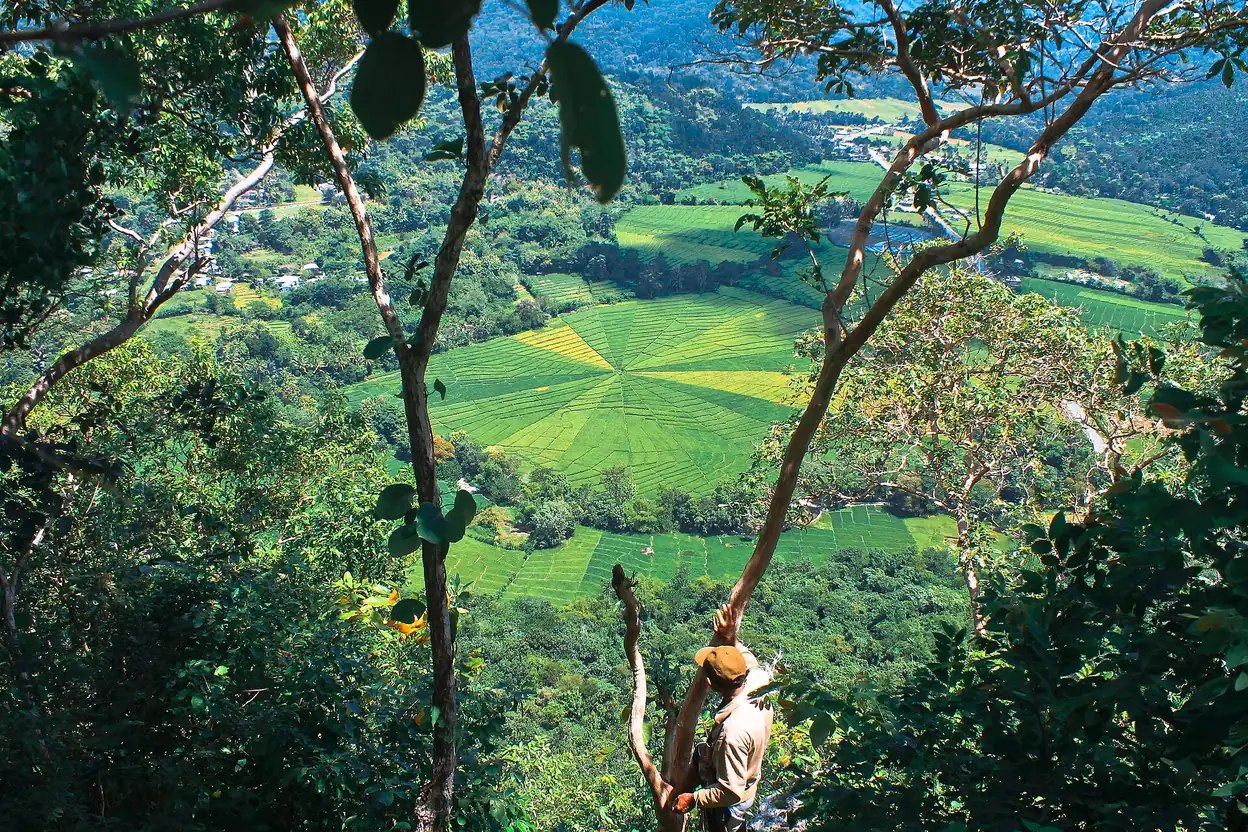
Lingko land rights rest on customary tenure: the Manggarai regency tourism office describes lingko as customary land shared among the residents of its area. Detik reports outside rulers weakening customary leaders and courts leaning on national agrarian law, and the ISVS study reports land split into individual plots. This page is educational and is not legal advice.
Who holds lingko land rights?
The regency tourism office describes lingko as customary land divided among residents of the customary area, known in Indonesian as tanah ulayat. Flores Exotic Tours, an operator, says nobody conceived the moso, a segment of the lingko, as private property, and that shifting cultivation once worked this land. That is a commercial source making a historical claim, so treat it as one account.
Membership was not entirely closed. A Cancar resident told Mongabay that outsiders could request land by bringing a rooster and arak, a practice called kapu manuk lele tuak. The detail shows how the system handled newcomers: through a request and a customary gift.
A 2016 peer-reviewed study of Manggarai in the Ruteng Mountains reports traditional land management with a zoning system for sustainable use. It concerns the wider mountains and does not name lingko in what is cited here, so read it as background.
None of this tells you who holds a particular plot today, and any single field at Cancar may have its own history.
| Term | Meaning in these sources | Source |
|---|---|---|
| Lingko | Customary land, divided among residents | Regency tourism office |
| Moso | A segment of a lingko, not conceived as private property | Flores Exotic Tours (operator) |
| Rahit | Boundary line between lingko of different villages | Detik |
| Kapu manuk lele tuak | An outsider's request for land, with a rooster and arak | Cancar resident, via Mongabay |
| Tu'a golo, tu'a teno | Customary authorities whose power outside rulers weakened | Detik |
| Gelarang, dalu | Officials appointed by those outside powers | Detik |
What is rahit?
Rahit is the line that marks the boundary between lingko belonging to different villages. Detik reports that residents may not work another village's lingko. It is a boundary between communities, which makes it different from the lines you see inside a web, those that separate one family's segment from the next. Our page on how moso divides land inside a lingko covers those inner lines.
The distinction is useful because a disagreement can sit at either level. Two families can differ over a segment, and two villages can differ over where one lingko ends. How a boundary is proved when people disagree goes undescribed, so "who decides?" stays open.
How have outside rulers changed it?
Pressure on the system is old. Detik reports that Goa-Tallo, Bima and the Dutch, among other outside powers, appointed gelarang and dalu, and that this cut into the authority of the tu'a golo and tu'a teno. The Jakarta Post describes the tu'a teno as the elder who manages allocation of customary land, which is why we read that change as touching the centre of the system.
That history matters for anyone reading about customary land today. Custom has not stood still and untouched until the recent past, and what is described as tradition has already been through several rounds of outside authority. Our history of lingko looks at how far back the pattern can be traced and why dates in the sources conflict.
How has individual ownership changed it?
The ISVS study finds lingko land broken up into smaller individual plots, at a cost to the coherence of the system. Set that beside the operator's statement that a moso was not conceived as private property, and you can see how far practice has moved from the customary idea. Both can be accurate, as one describes an original concept and the other a later trend.
The study's concern is with coherence, meaning whether the parts still work as one system. What that means for any family or for inheritance is a separate question. The questions readers bring, such as whether a family can sell, or whether an individual title weakens the customary claim, are legal questions with local facts attached. Those belong with a qualified Indonesian lawyer.
How do courts treat customary land?
Detik says that in land disputes after independence, courts tended to rely on national agrarian law and rarely on the lingko system. That is a press summary and describes a tendency. It is neither a ruling nor a survey of cases, and it does not mean custom counts for nothing in every setting.
Detik describes a tendency only; this page draws no legal conclusion from it. It does not analyse Indonesian land law or say what protection applies to any land at Cancar. None of the sources cited here reports a specific current dispute at Lingko Meler, and that says nothing about whether one exists.
Why does it matter to visitors?
You are unlikely to meet any of this on a visit to the spider web rice field, but it should change how you act.
- The view is land someone has a claim to. Being able to see a plot from a hillside gives you no right to walk on it. Stay where you are directed.
- Stories you hear are partial. A guide or resident may tell you who owns what and how it was shared. That is one account, and accounts differ.
- Take care with questions. Land can be a sensitive subject. Asking how the system works is a normal question. Pressing someone on a neighbour's plot or a dispute is not your place.
- Do not treat this page as advice on land. It offers no guidance on buying, leasing or developing land near the fields, and the desk does not handle land matters.
What else do people ask about customary land at Cancar?
Does unregistered lingko land create disputes?
Detik reports that courts in land disputes after independence tended to rely on national agrarian law and rarely on the lingko system. Take any specific case to a qualified lawyer.
How are disputed lingko boundaries determined?
Detik says rahit lines mark boundaries between lingko of different villages. It also says courts have tended to rely on national agrarian law. How a particular dispute is settled depends on its facts and forum.
What is tanah ulayat in Cancar?
Tanah ulayat is customary land. The regency tourism office treats lingko as that customary land, shared out among people of the area. Sources here do not state the legal status of any specific Cancar plot.
Are the Cancar rice fields communal land?
They are customary in origin, on the regency tourism office's account. The ISVS study adds that lingko land has been split into smaller individual plots, so communal is too simple a word for the position today.
Can families sell customary land in Cancar?
This page is not legal advice. It is a question for a qualified Indonesian lawyer with the facts of the specific plot. This guide does not advise on buying or selling land.
Which sources support this page?
- Manggarai regency tourism office: Lingko Meler
- Mongabay: Sawah berbentuk jaring laba-laba di Manggarai, 2017
- Detik: Lodok Manggarai and customary land
- Flores Exotic Tours: Spiderweb rice fields, Lingko Cara
- ISVS e-journal: study of lingko and mbaru gendang
- Neliti: traditional land practice in the Ruteng Mountains, 2016
- Jakarta Post (2013), via Yahoo News
How do I reach the desk?
Corrections and better sources are welcome on WhatsApp +62 811-3941-4563 or bd@juaraholding.com. The desk gives no legal advice and takes no part in land matters.
Send the desk your dates and route across Flores. The desk replies in writing.
Ask the desk on WhatsApp bd@juaraholding.com